The kitchen deserves a full week’s worth of posts, but I won’t inflict that! It’s very large.
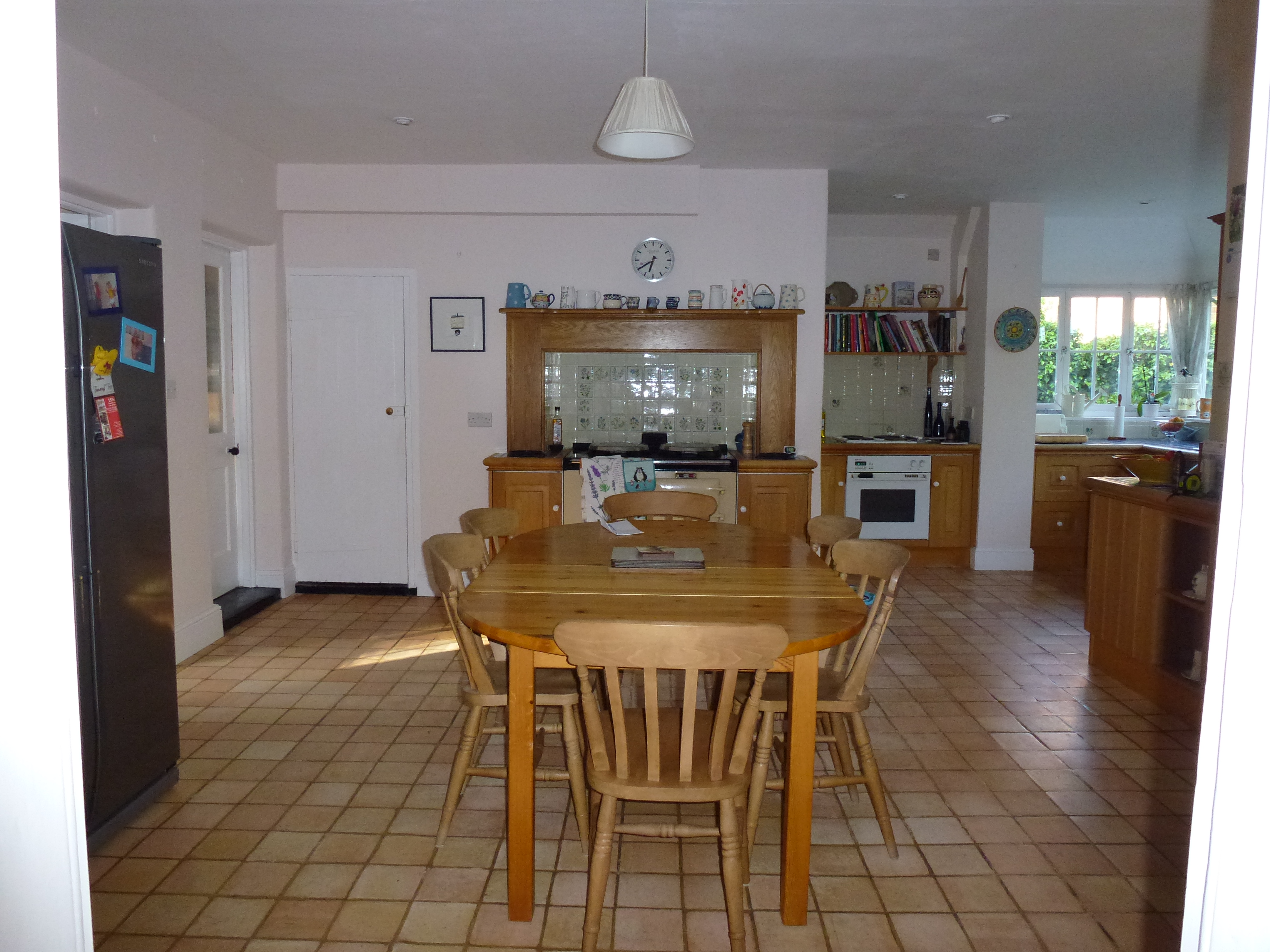
The kitchen, taken from the dining room door. Utility room and pantry on the left; back door on the right (though it does open out at the front of the house!)
As you stand in the middle, there are six doors leading out: one to the back door, one to the dining room, one to the sitting room, one to the utility room, one to the pantry and finally one to the back of the Aga and the boiler. We have a new kitchen table on order: the one we’re using is our old dining table from two houses ago, which was up in our loft for the whole time that we lived in the last house. Nice table but it does wobble and the middle panel is a different shade, and the ends are curved which makes it harder to sit people comfortably down the sides. Ian adores the Aga and has adapted very quickly to using it.
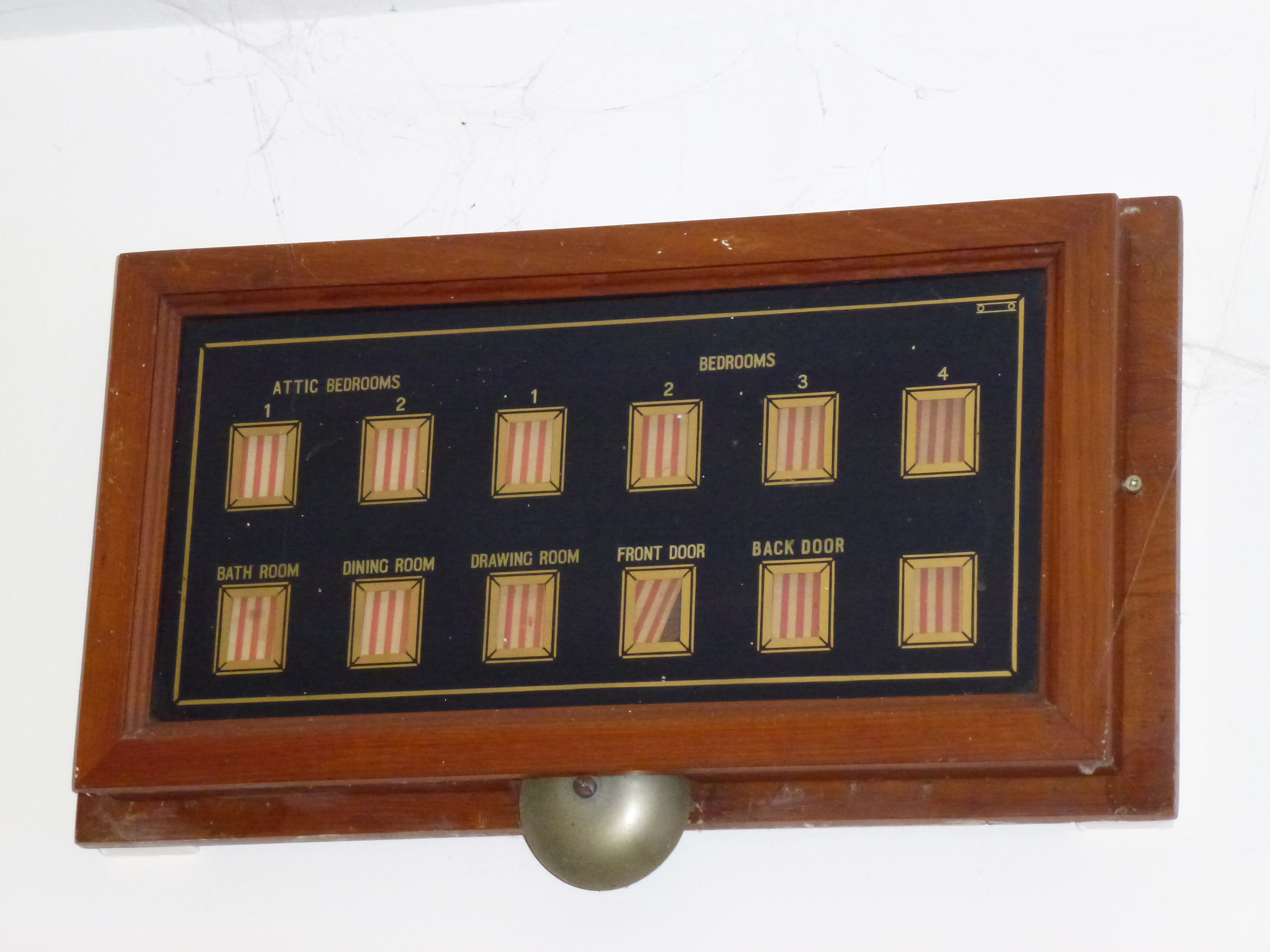
Master panel for the bell system
On the wall above the doors leading to the dining room and the sitting room there’s the master panel for the bells throughout the house. The bells must have been installed in the early part of the 20th century – the style is very much 1910’s. The front door flag is broken in the open position: but when you press any of the bells in the different rooms, the stripy flag waves to indicate which room is summoning.
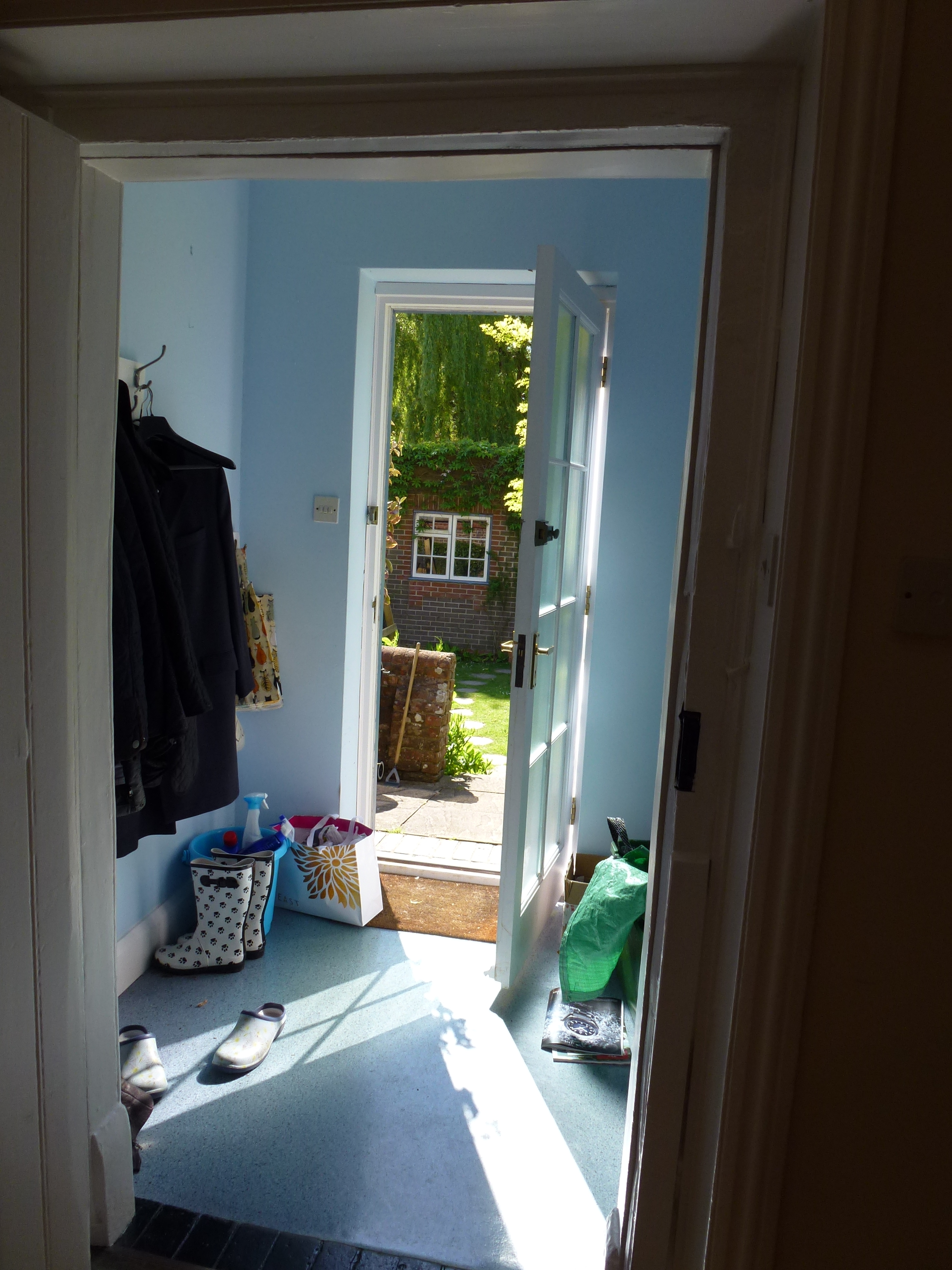
Kitchen door going out to the front of the house via the alternative front door
The door which leads to the outside is a really useful place for boots, coats, recycling containers etc; and there’s a small downstairs cloakroom in there too.The kitchen sink is a lovely deep butler’s sink, which holds loads.
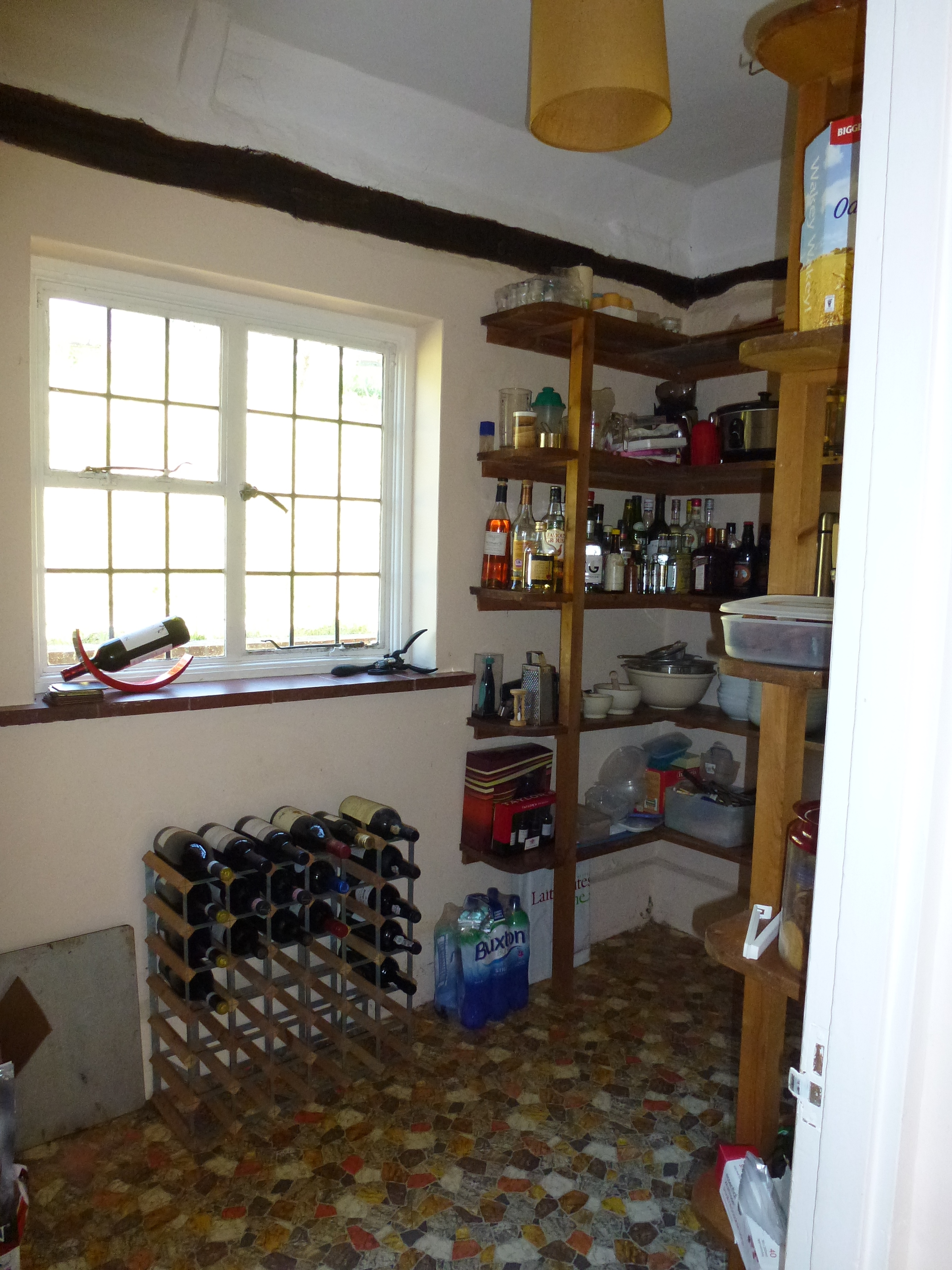
The pantry, or larder, from the kitchen, complete with lino and beams
The pantry floor is a linoleum from what seems like the 1960’s; and we were astounded at how much the shelving would take. As you can see, we’ve packed the contents of an average kitchen in there, and there’s plenty of room for more.
In terms of the floorplan of the house, the pantry and utility room are right at the back of the house; and when you look at the beams, and the way the walls have been constructed, including the depth and the plaster, it feels to me that the house is older than 1737. I think these parts are Tudor and that the original buildings were steadily absorbed into the larger house.
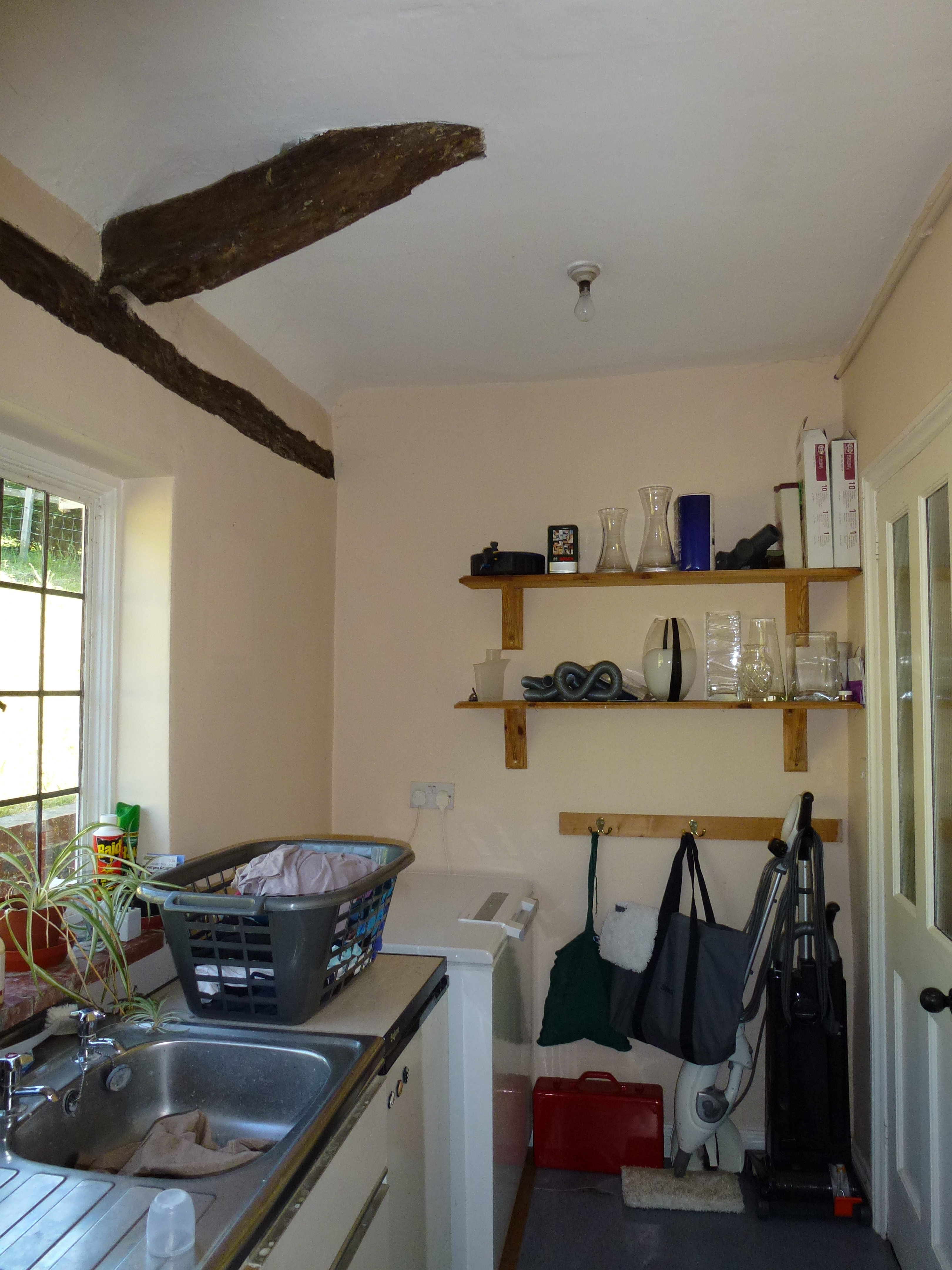
The utility room with more lovely beams
I have to book an appointment at the local records office to start the research: but I think I’ll make that the autumn’s project. My gut feeling is generally that the whole house was not built from scratch in the Georgian times, but was a rebuilding and extension on original buildings.
 Hillfoot House
Leave a comment